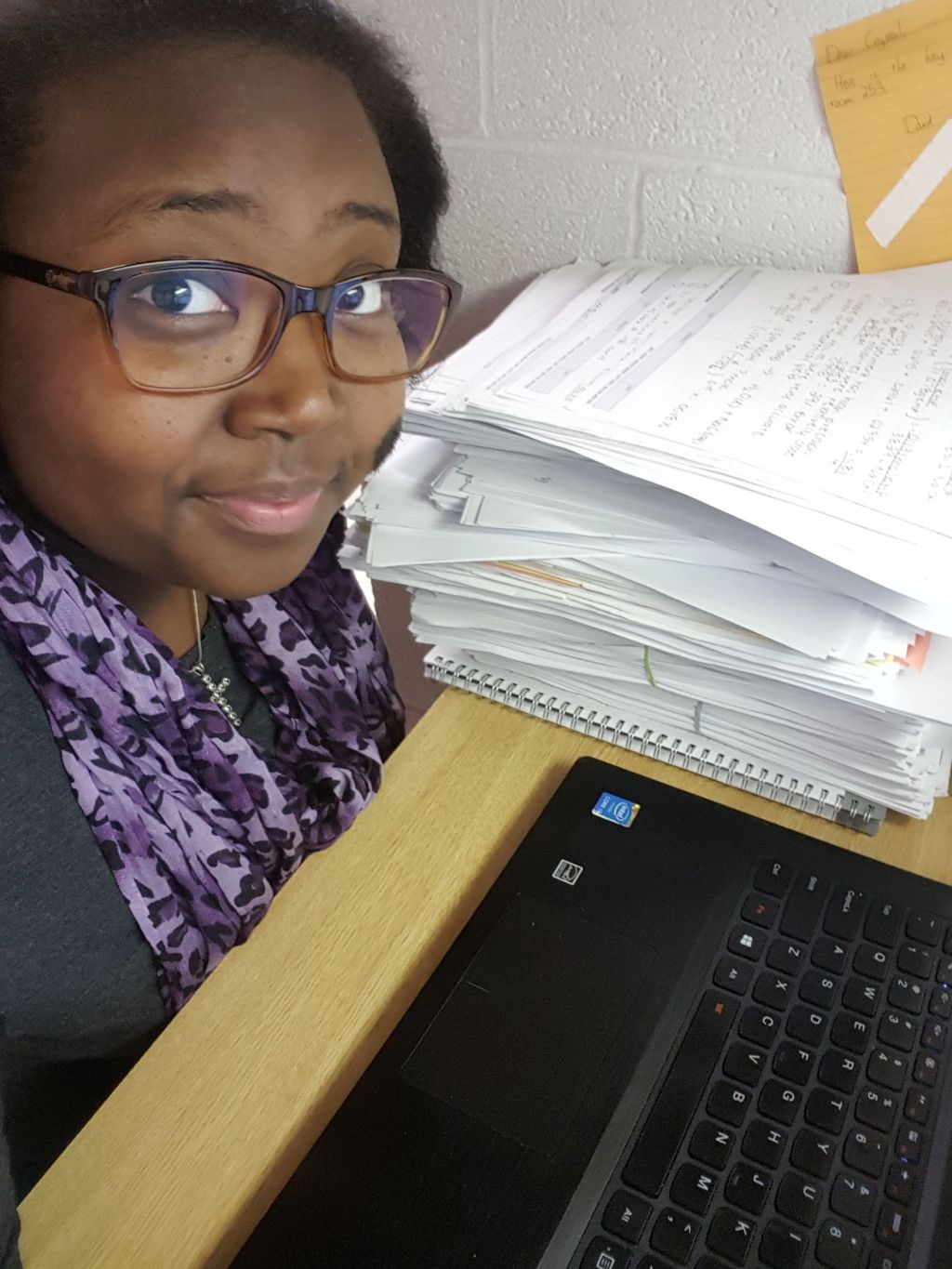
A part of my graduate school contract was to be a Graduate Teaching Assistant (GTA) during the first few years of both my MS and PhD studies. Believe me, it was intimidating at first because we all fear the unknown. There can be more questions than answers during major transitions of life; thankfully, I found my way.
Teaching and the value of education runs deeply in my family. My mom, grandfather, aunts, uncles, and cousins all have careers in education.
If you know my family, I’m sure you know that teaching runs through our veins. My mom, grandfather, aunts, uncles, and cousins all had careers in education. With that came a great respect for teachers, because truly have a caring way to guiding you while also holding you accountable to learning and growing. With a mom as an expert educator (MS, MAEd), I was instilled with the mentality that you are an expert on a topic once you can teach someone else. But of course, teaching has an art to it. One must teach in a way that students can not only understand the information, but also to apply that newfound knowledge in practical ways.
Below I discuss a few challenges that I faced during the early years of my Graduate Teaching Assistantship.
Related Post: Graduate Teaching Assistantships – What to Expect
So what are the 3 major challenges?
During my first year as a Graduate Teaching Assistant (GTA), I quickly learned that the expectations were far greater than tutoring in middle school, volunteering in high school camps, or even serving as a lecture aide in senior year of undergrad. My GTA experiences led me to some challenges, and in this post I describe some strategies I used to navigate the journey.
1) Your teaching style as a GTA is likely unknown.
If you are a first-year GTA, it is likely that you do not have a defined teaching style. Both of the chemistry departments that I worked in had different requirements for the GTAs. Many of the GTAs teaching lab courses for the entry-level chemistry classes have strict guidelines for what must be taught. This is likely due to alignment between all of the professors on the content that will be taught weekly to correspond to the lab requirement.
For some of the higher level lab courses, the GTA may be have more experience and be given more duties. For example, during some of my GTA positions I was required to write pre-lab lectures, as well as quizzes. If lectures are required, you will learn how to pace for content and questions. Additionally, you learn multiple ways to teach the same content so every student’s learning style is covered.
Suggestion: Be confident and demand the respect you have earned.
When I first started teaching at UNC Charlotte, I was 22 years old. During my tenure at UNCC, the university had quite a large population of non-traditional students; therefore, I had students from 17 to old enough to be my parent. Having just finished by Bachelor’s degree, I was nervous and fighting off imposter syndrome symptoms. (I remember my first day lecturing for chemistry lab: I had so much stress sweat it is not even funny. HAHAHA!) Regardless of those feelings, I had to own the space, acknowledge that I was the most knowledgeable person in the room, and most importantly, responsible for everyone’s safety in case of emergency. Lean into your role instead of shying away – you got this, stress sweat and all!
2) The grading can pile up quickly if you are not proactive.
No matter if you have been teaching for 1 month or 1 decade, there is an unspoken consensus that no one enjoys grading. Grading is not as straightforward as it seems – you know following a rubric or check sheet and calculating the points earned. Sometimes in STEM-related subjects, grading also consists of following math logic (or the illogical gibberish from a student that didn’t study), accounting for variability in lab experimental results and success (because some experiments fail miserably), as well as the “no show” or ill-prepared students blowing up your email inbox asking for extra credit assignments. At UNC Charlotte, I had about 72 students each semester. At Virginia Tech I had about 80-150 students per semester. Believe me – the grading can quickly pile up (sometimes right when you have your own finals to study for as well).
Suggestion: Stay ahead of the grading by scheduling time on your calendar.
Every student is responsible for the effort they apply in their classes. Personal accountability of your grade is critical at the university level. During my first year as a GTA, I struggled saying no to extra credit assignments and late submissions. You know there are always students right on the border of the next grade (like an 88 (B) vs a 90 (A)). There were the students that looked for every possible way to earn points back after getting them taken away, students procrastinating and turning in late assignments that yielded them a zero, and the students that had no desire to be in lab at all. Both UNCC and Virginia Tech had the same chemistry course taught by a few professors (ie. entry level chemistry). All of the students that semester then scheduled a lab course that was associated with the lecture. To keep grading consistent throughout the department for the large courses (400+ students), giving student extra credit opportunities was not allowed. It was not fair due to the alignment of the grading system department-wide. It was personally advantageous though. Grading more than you have to while taking classes yourself AND your own homework assignments AND midterms/final exams…it becomes a difficult task list to balance. That all leads to a stressful amount of grading and email correspondence about grades! Just power through and get the required grading completed on a weekly cadence.
3) Learning balance will prevent you from feeling overwhelmed.
Lesson plans keep coursework on track. Assignments and exams keep lectures on a schedule. Homework keeps the students accountable for their learning. As a GTA, the challenge is in finding balance. My first couple of years in graduate school I had my own coursework to complete, not to mention the homework and other group assignments. As a chemistry student, I was also required to do research to complete my thesis and dissertation.
Let me break down what a typical work week was like for me, a chemistry graduate student and department GTA. So, there are 168hr/wk and most people work about 40hr/wk, which is less than 25% of your entire week. In grad school, I was required to work as a GTA for 20hr/wk. This included completing tasks like teaching classes/labs, holding office hours, and of course, proctoring exams and grading. Many grad students spend between 40-60hr/wk doing research-related tasks such as writing papers/publications, performing lab experiments, analyzing data, and attending weekly group meetings. And of course, we just spoke about homework. It was easy to spend 10-20hr/wk studying and completing assignments for your courses. I had to study for finals while also administering them. It was not uncommon to spend 100hr/week doing grad school-related tasks, which is more than 50% of a typical week.
Suggestion: Develop a productive routine to aid in achieving work-life balance.
I’m sure you can see why many grad students lack a lot of free time. For years, I did not know what “leisure time” really was. But, I will say grad school taught me how to develop productive routines. I maximized my time to the fullest extent. Mornings were for hands-on lab work, teaching, and the typical daily tasks (ie. emails, reading papers, etc.). Afternoons were for desk work – reading, writing, and grading. Nights were for homework and planning experiments for the next day. Building a routine helped me a little bit of a work-life balance while in graduate school. Plan time to be social – there is more to life than graduate school work.
Closing Thoughts
Throughout all of my experiences as a GTA, it was challenging but very rewarding. Inspiring inquisitive minds, serving as a role model to students, and learning new skills became a daily motivator. I had to demand respect and be confident in my role, overcoming any imposter syndrome symptoms. To ensure that I was maximizing my productivity, I had to stay ahead of grading by allotting time to get it done. Lastly, I learned that finding balance is necessary to achieve a work-life balance.
Now that I’m on the other side of my graduate studies, I’m grateful for the experience. I learned a lot about how to cultivate productive workspaces, to invest in the next-generation of scientists, and to learn great patience.


 Dr. Crystal K. Waters
Leave a comment