
Exactly 7 days after I defended my doctoral dissertation, I walked into my first professional position as a technical leader in the chemical industry. Specifically, I was thee battery expert for a multi-billion dollar company and I was immediately overwhelmed. Hahaha! If I didn’t know I was alive, walking into my first real professional career role had my heart racing. I mean, the first thing I had to do was get a badge and to this day I dislike the photo because of how much stress sweat I had! Hahaha!!
But to be honest, I had no idea what to expect in the industry except that I was going to be a “small fish in the ocean”. Surprisingly, my desk was located directly near the door and I was a new face roaming the hallways so people would kindly speak and introduce themselves to me. I had not quite settled into my new role, but the responsibilities found me quickly. The academia-to-industry transition for me was FAST! A “baptism by fire” of sorts. I was the newly hired battery expert, fresh out of Virginia Tech, and it was time to show the industry what I was made of.
Everyone talks about the academia-to-industry transition, but few share what they learned from it.
The academia-to-industry transition is an interesting time in anyone’s career. It is the epitome of ending one chapter while anticipating what is going to come next. It is full of anxious excitement, a little fear of the unknown, and a whole lot of expectations. For those of us that spent the last 4-5 years finishing a dissertation, the transitional period also has a hint of depression that is overcome by a deep breath and inner work to re-discover the amazing person you are outside of a “PhD student”. I write this as proof that wherever you are in life’s transitions, YOU WILL get to the other side. You can create an extraordinary career and life! I DID!
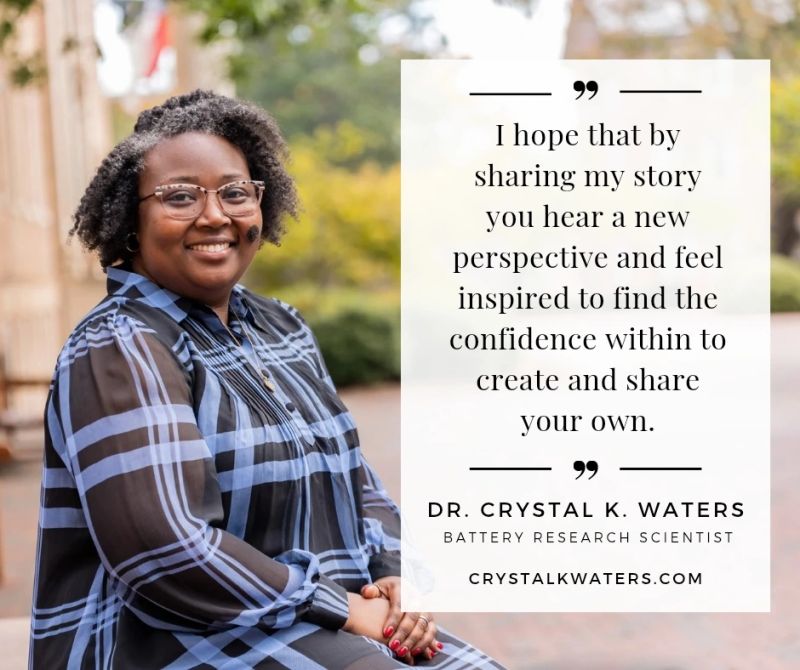
Here is a list of 5 things I learned…
1) Intellectual humility is key to solve tough problems.
Because my transition from graduate school to industry was very quick, I understood that I did not know it all. I actually think that the more you learn the easier it is to accept that there are so many things you do not know. In the industry, I have found that it is critical to have intellectual humility because it supports a mentality of open-mindedness. It is something that helps you learn from multi-generational, multi-cultural peoples. It has helped me remain open to learning from people of all ages, races, and cultures. This has been an important factor as I now lead global technical efforts in my current role. I truly believe that perspective matters and the most brilliant minds are necessary to solve the world’s toughest problems. Always remember that you can learn something from anyone. We all have valuable perspectives!
2) Good ideas are simply ideas if they do not generate revenue.
This one can be difficult to accept – we all have some wild ideas that we hope could turn into a world-changing solution. Hahaha! In reality, working in the industry requires us to MAKE MONEY. In graduate school, you can peruse yourself through experiments and get stuck in a tunnel of trying to force chemistry to work by exploiting as many tunable parameters as possible. Sometimes you can even get extremely lucky and have 1 example work by chance and publish it; unfortunately, if it is not a scalable solution it may not be the best idea in industry. It is a quite a bit different. There is a synchronized dance, of sorts, between R&D scientists, manufacturing experts, and of course, the business people that sell the products. Delivery timelines are fast approaching, customers are begging for quick solutions, and next-generation products are waiting to be commercialized. One of the main things I had to learn during my first few months in industry is how to “FAIL FAST”. If something is not showing significant promise, you have to abandon the idea…even if you have a lot of personal interest and investment in understanding the fundamentals. Your good ideas have to be reasonable, differentiated from the literature, and lead to some financial growth. To say the least, you have to discover a solution that can be manufactured AND sold for profits. It’s not as easy as you think!
3) Communication skills are important to convey value and engage key stakeholders.
As a kid, I participated in community theater (shout-out to all of my readers that know about Act! for Youth). I am quite the introvert, but many people in industry would not know it. When it is time for me to communicate and present technical work to cross-functional teams, I do my best to meet people where they are. Even with this blog, I try to make the topics relatable to anyone that stumbles across my site. As a technical leader, honing your presentation and communication skills sets you apart from most of your peers. It will help you show the value of your technical projects and ideas, as well as learn how to appropriately share useful information to a variety of leaders – both technical and non-technical. It also helped me travel and become an International speaker! This was a moment where opportunity and preparation met and I was beyond grateful.
4) Do not allow imposter syndrome to keep you limited!
If you have not heard of imposter syndrome, it is a mental pattern where people question their accomplishments and abilities causing tremendous self-doubt. Many people struggle with it but few will admit it. But, you know, that’s totally okay. The bigger thing is not to allow it to cause self-limiting thought patterns that keep you small and not on a growth trajectory! One of my main goals is to remember my “WHY” and not allow the daily challenges and temporary circumstances to keep me from achieving what is possible. I try not to wait for others to give me an opportunity – no one has given me anything (it was hard earned, actually). Instead, I find ways to create the things I KNOW I DESERVE. Regardless of your past, always remember that those mistakes and failures led to today. And today, you deserve the best because you’ve worked hard enough to get to this point. BE CONFIDENT!
5) Never let your personal dreams die.
Remember that joining any industry is your career…it is not your life! It is actually quite a small piece of who you are. Even if you may not think so now, you are so much more than what you do for work. Hobbies are important. Connecting with friends and those we call family is important. Exploring our passions is important. We are all on our respective career paths, but we also have a life path. We are all searching for something that fulfills us and my hope is that you find just that!

While I’ve only been in industry for 4 years, I have learned quite a lot. This is only a high-level that I share here in this post. I’m always eager to chat with others that are on their path to success! If I can help and support you along your journey, please do not hesitate to connect with me at dr.crystalkwaters@gmail.com. Many thanks for reading this blog post!


 Dr. Crystal K. Waters
Leave a comment