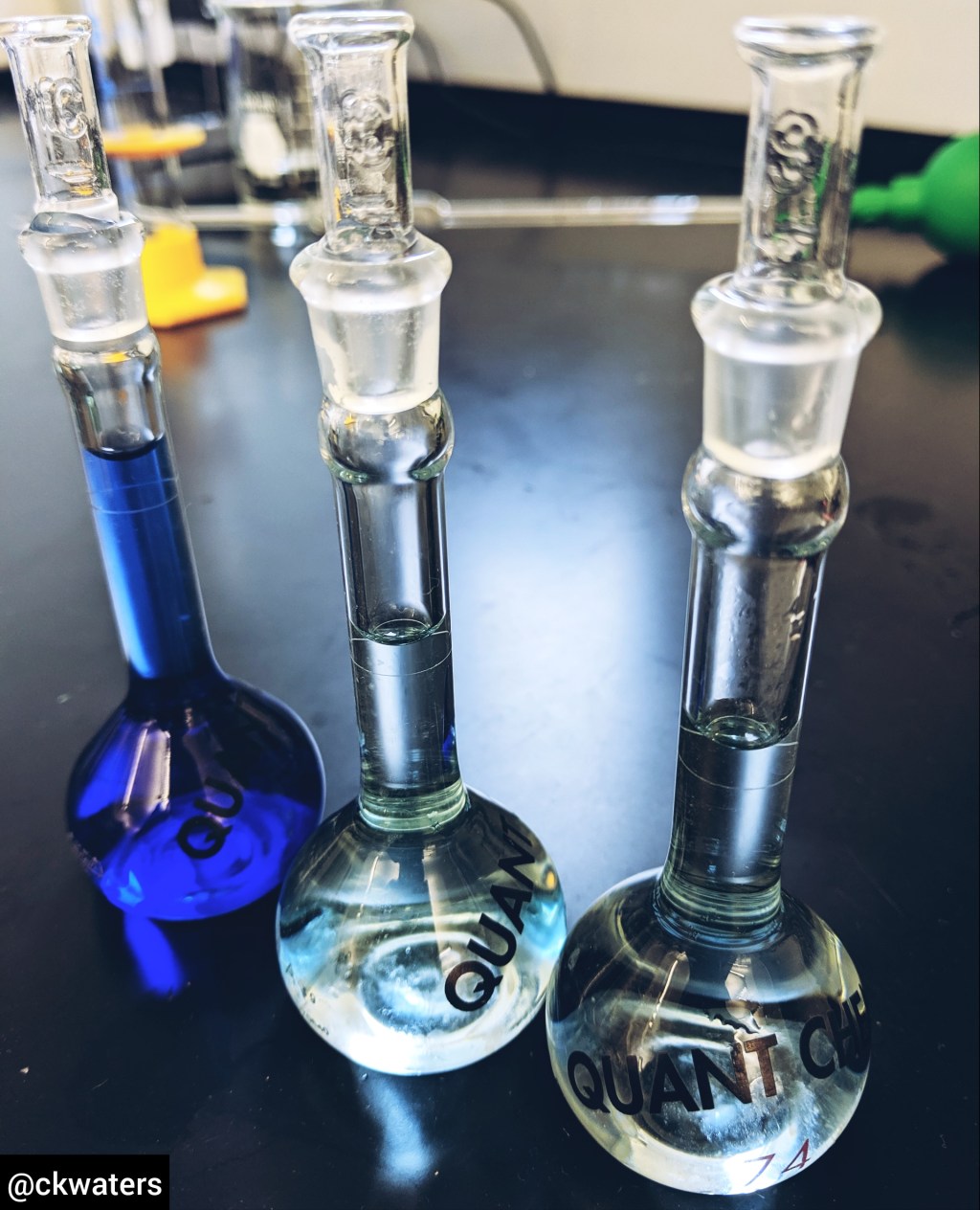
Woohoo! So you have finished (or nearing the end) of your undergraduate degree studies, but what comes next?! I was asking myself the exact same question in Spring 2014 as I was fighting senior-itis and exploring industry and career options in with my Bachelor’s degree in chemistry. There is a lot of information out there on the world wide web, but it is really difficult to understand where or how to begin finding the most relevant, experience-based information to improve the ease of decision-making.
If you are wondering, “should I choose a coursework- or thesis-based graduate program”, then you have landed in the right place! Herein, I will share some of the advantages that I experienced choosing a thesis-based, chemistry Master’s program at the University of North Carolina at Charlotte (UNC Charlotte).
Why did I choose to do a Master’s Program first?
When I completed by Bachelor’s degree at UNC Chapel Hill, I honestly was unaware of what it would be like to have a career in chemistry. I knew that chemists were employed by a few companies in my hometown, such as Merck Pharmaceuticals and Firestone, but did not know how expansive careers in chemistry could be.
I did not do undergraduate research. I would highly recommend it if you plan on having a career in laboratory. The hands-on experience you gain in a research lab is a little different than a typical undergrad lab required for your degree. As I was applying for graduate school and industry positions after undergrad, I learned that in both cases it was more advantageous to have lab experience outside of the standard coursework to be a competitive candidate. So what did I do? I found a way to gain the necessary lab experience I needed to improve my career options while also taking a stepping-stone approach to approaching a 5-year commitment to a PhD program.
Related Post: A Recap: The Journey to Dr. Waters
Advantages of Thesis-Based Master’s Program
- The program provided me with research lab experience.
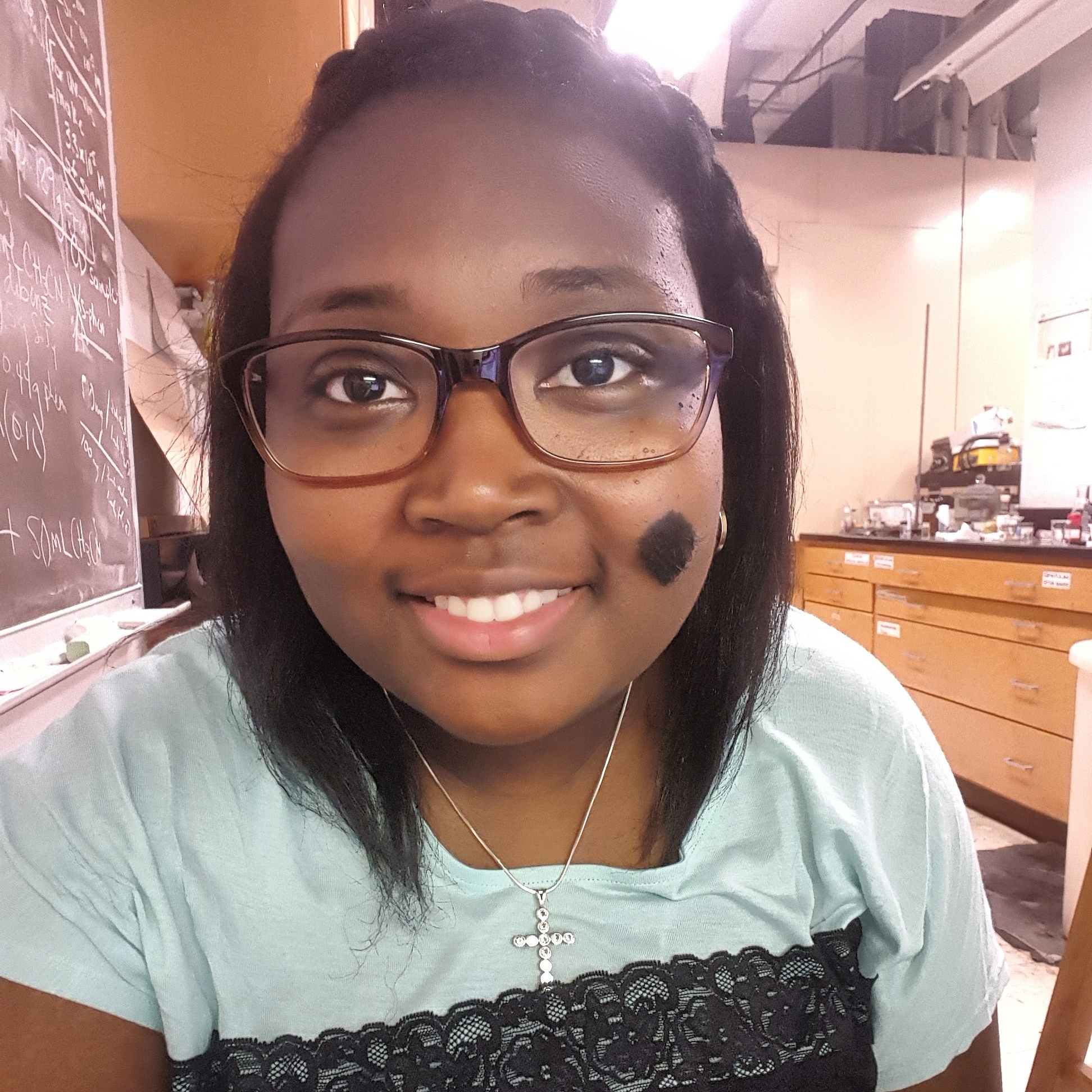
- Chemistry classes populated a large amount of my undergraduate course schedule; although, I did not participate in undergraduate research. Without research on my resume, it was somewhat difficult to stand-out and be competitive when applying to Early Career Chemistry positions and Graduate School Programs. By completing a thesis-based Master’s program I was able to gain skills, such as optimizing search terms for peer-reviewed journal articles, hone my scientific writing capabilities, and learn how to think as a research scientist. The MS Chemistry Program at UNC Charlotte gave me the research experience I required to level up my resume. It was an advantageous stepping stone to mature me as a chemist and thinker before deciding to commit to a 5+-year doctoral program. Above all, completing my thesis helped me explain my scientific skills and research experiences to be a more competitive candidate when applying for academic and professional opportunities.
- There was limited coursework since the focus was to build research skills.
- I was required to only take 2 formal instructional courses at UNC Charlotte. The rest of my time was spent doing research and fulfilling my duties as a Graduate Teaching Assistant (GTA). I will mention that while I did not have many classes during my Master’s program, none of the credits transferred to Virginia Tech for my doctoral studies.
- The small department provided superior mentorship.
- Finding a good mentor is important. The Chemistry MS program I attended was very small. There were only 6 students in my cohort. Half of us landed in a PhD program after graduation and the other half obtained careers in the chemical industry. Having a small program provided many opportunities for one-on-one mentoring, individualized academic support, and professional development in and out of the research lab. To this day, I am still connected with my research advisor, Dr. Thomas Schmedake. Each of my MS thesis committee members remain a part of my ever-growing professional network, providing guidance, feedback, and recommendations along the way. I would recommend that every student build a robust network of mentors and supporters.
- The Graduate Teaching Assistantship (GTA) provides instructional experience.
- Every chemistry graduate student that I have met has had a GTA for at least one semester. Although grading, answering emails, and developing instructional materials may prove annoyingly time consuming, the GTA hones your ability to communicate with peers and those with less knowledge and experience. This becomes a great asset when working on diverse industry teams. Scientists often must communicate their findings with non-STEM colleagues. Additionally, after earning a graduate degree you may be responsible for teaching and supporting junior-level coworkers on your team.
- Free tuition (well, I still had to pay the fees).
- A huge advantage to the UNC Charlotte MS Chemistry program was that the tuition was free. Of course, you are expected to have either a GTA or a Graduate Research Assistantship (GRA) to ensure that you have an income. I promise, your stipend is more than enough to survive (just live within your means). While the bulk of my tuition was free, I did have to cover the in-state tuition fees each semester. The fees cover things such as, use of the campus gym, library, and other campus services.
Related Post: Recap of 2016
Doing a research-based degree may seem daunting, but know that it can be extremely rewarding!
The MS Chemistry program was a very exciting time for me. I learned (and unlearned) a lot of chemistry principles, honed my communication skills, developed a strategic network of advisors/supporters, and proved to myself that I could tackle a PhD program. It was financially affordable and provided me with the necessary tools I needed to be a competitive applicant for doctoral programs and industry.
I’ll admit, this is a brief glance at what I believe to be some of the major advantages to completing a thesis-based Master’s program. And to be honest, I was not intending for this to be a comprehensive list. This is a conversation starter! So go ahead, ask as many questions as you want in the comments below and I’ll do my best to give you a response. I do wish you well on your path – whatever you choose!
Until next time…



 Dr. Crystal K. Waters
Leave a reply to Why Choose a Career in Chemistry? – Dr. Crystal K. Waters Cancel reply